Work Hours
Monday to Friday: 9AM - 6PM
Weekend: Closed



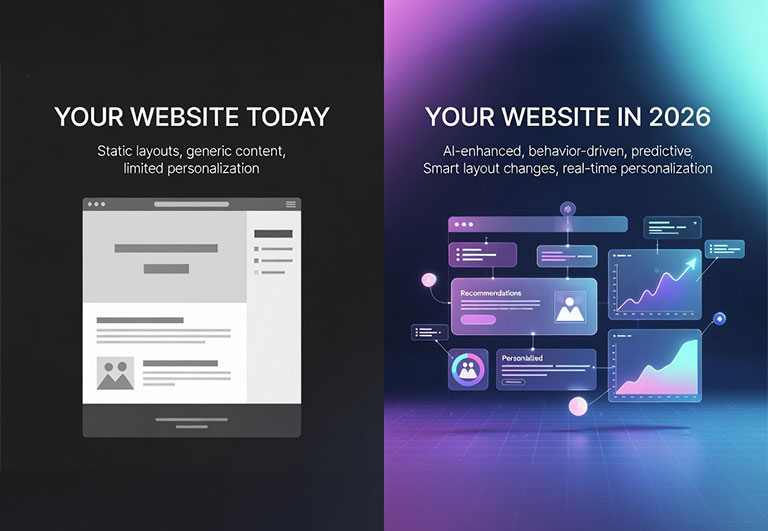
Visual branding is entering a new era. As user expectations evolve and search engines become more experience-driven, web design is no longer just about aesthetics — it is about performance, personalization, and measurable growth.
Businesses that treat website design as a strategic growth asset will outperform competitors in visibility, engagement, and conversions. In 2026, visual branding will be smarter, more human-centered, and deeply integrated with SEO strategy.
If your website has not evolved in the last two to three years, it may already be falling behind. Here’s what forward-thinking businesses should expect next.
Why Visual Branding Matters More Than Ever
Modern consumers form an opinion about a brand within seconds of landing on a website. That first impression directly affects bounce rate, trust, and conversion probability.
But branding is no longer just about logos and colors. In 2026, digital brand identity will be shaped by:
- User experience optimization
- Mobile-first design
- Website performance speed
- Accessibility standards
- Conversion-focused layouts
Search engines now evaluate user behavior signals such as dwell time, interaction, and mobile responsiveness. That means SEO-friendly website design is no longer optional — it is foundational.
Businesses investing in responsive web design and optimized user journeys are seeing stronger rankings and better return on marketing investment.
AI-Driven Personalization Will Shape Website Experiences
Artificial intelligence is transforming web design into a dynamic experience rather than a static one.
In 2026, websites will increasingly adapt in real time based on:
- Visitor behavior
- Search intent
- Purchase history
- Geographic segmentation
- Device usage
Imagine landing pages that adjust messaging automatically for first-time visitors versus returning users. Or ecommerce website design that highlights products based on browsing behavior.
AI in web design allows businesses to deliver personalized website experiences without rebuilding their entire site structure. This not only increases engagement but significantly improves lead generation and conversion rates.
Brands that leverage predictive UX will have a measurable advantage.
Minimalism 2.0: Strategic Simplicity with Bold Impact
Minimalism is evolving. In 2026, modern web design will emphasize clarity and bold brand positioning rather than overly complex visuals.
Expect to see:
- Strong typography hierarchy
- High-contrast color schemes
- Intentional white space
- Clear visual storytelling
- Simplified navigation systems
This shift is not just aesthetic. Clean layouts improve mobile-first design performance and website speed optimization. Faster load times directly influence SEO rankings and reduce user friction.
Strategic simplicity helps visitors find what they need quickly, which improves both engagement metrics and conversion outcomes.
Motion UI and Micro-Interactions Will Increase Engagement
Interactive website design will become more refined and purposeful.
Rather than overwhelming animations, 2026 branding will focus on:
- Scroll-triggered micro-animations
- Subtle hover effects
- Interactive product previews
- Visual feedback for user actions
These micro-interactions guide visitors naturally through the conversion journey.
However, performance remains critical. Motion elements must be optimized carefully to maintain website performance standards and Core Web Vitals compliance.
When done correctly, interactive design enhances user experience without compromising speed — a balance that search engines reward.
Accessibility-First Design Will Be a Brand Standard
Accessibility is no longer a compliance checkbox. It is a competitive advantage.
In 2026, businesses will prioritize:
- High-contrast visual modes
- Keyboard navigation
- Screen-reader compatibility
- Voice-enabled interactions
- Clear font legibility
Accessible website design improves usability for all users, not just those with specific needs. It also supports SEO by improving engagement and reducing bounce rates.
Brands that prioritize inclusive design demonstrate responsibility, credibility, and long-term thinking.
Authentic and Human-Centered Visuals Will Replace Generic Branding
Consumers are increasingly drawn to authenticity. Generic stock-heavy websites are losing effectiveness.
The future of digital brand identity will include:
- Custom illustrations
- Real team photography
- Behind-the-scenes visuals
- User-generated content integration
- Transparent storytelling
Authentic visuals increase trust and emotional connection. When combined with strategic UX design, they strengthen brand credibility and support higher conversion rates.
Visual branding in 2026 will feel more human, relatable, and transparent.
SEO-Integrated Visual Branding Will Drive Rankings
One of the most important shifts happening right now is the integration of SEO strategy within web design architecture.
Forward-thinking businesses are aligning:
- Visual hierarchy with crawlability
- Structured data within layout frameworks
- Optimized image formats
- Conversion-focused landing page design
- Mobile responsiveness
SEO-friendly website design ensures that branding decisions support search performance rather than hinder it.
For example, poor layout structure can weaken keyword targeting and reduce indexability. On the other hand, well-planned content placement strengthens both user experience and search visibility.
In 2026, SEO and web design will operate as one unified growth strategy.
Conversion-First Branding Will Replace Vanity Design
A visually impressive website means little if it does not convert.
The next generation of website design trends will focus heavily on measurable outcomes such as:
- Click-through rates
- Form submissions
- Checkout completion
- Engagement metrics
- Lead generation performance
Conversion-focused design relies on behavioral data, A/B testing, and UX audits. It removes guesswork and prioritizes business objectives.
Ecommerce website design, in particular, will simplify checkout flows and reduce distractions to maximize revenue potential.
Design decisions will increasingly be backed by analytics rather than personal preference.
What This Means for Businesses Planning a Redesign
If your website feels outdated, slow, or inconsistent with your brand messaging, it may be time to reassess.
Common signs you need a redesign include:
- Declining organic traffic
- High bounce rates
- Low conversion rates
- Poor mobile performance
- Inconsistent brand visuals
Businesses that proactively update their digital branding strategy position themselves ahead of competitors.
Rather than reacting to lost traffic or declining engagement, a strategic website redesign aligned with 2026 trends can drive sustainable growth.
Preparing Your Brand for 2026
To stay competitive, businesses should:
- Conduct a UX and SEO audit
- Improve mobile-first responsiveness
- Optimize page speed and Core Web Vitals
- Align branding with conversion strategy
- Integrate SEO into website architecture
- Review accessibility compliance
Future-ready branding is not about following trends blindly. It is about aligning visual identity with measurable performance.
Conclusion
Visual branding in 2026 will be intelligent, personalized, performance-driven, and deeply connected to SEO strategy. Businesses that invest in modern website design today will benefit from stronger rankings, improved engagement, and higher conversion rates tomorrow. If your current website is not aligned with evolving SEO standards, user experience expectations, and conversion best practices, now is the time to act.
Segnant specializes in building SEO-optimized, conversion-focused websites that combine powerful branding with measurable growth strategies. Whether you need a full website redesign, UX audit, or integrated SEO strategy, our team can help position your business ahead of the competition.
Schedule a strategy consultation with Segnant and prepare your brand for the future of digital growth.