Work Hours
Monday to Friday: 9AM - 6PM
Weekend: Closed



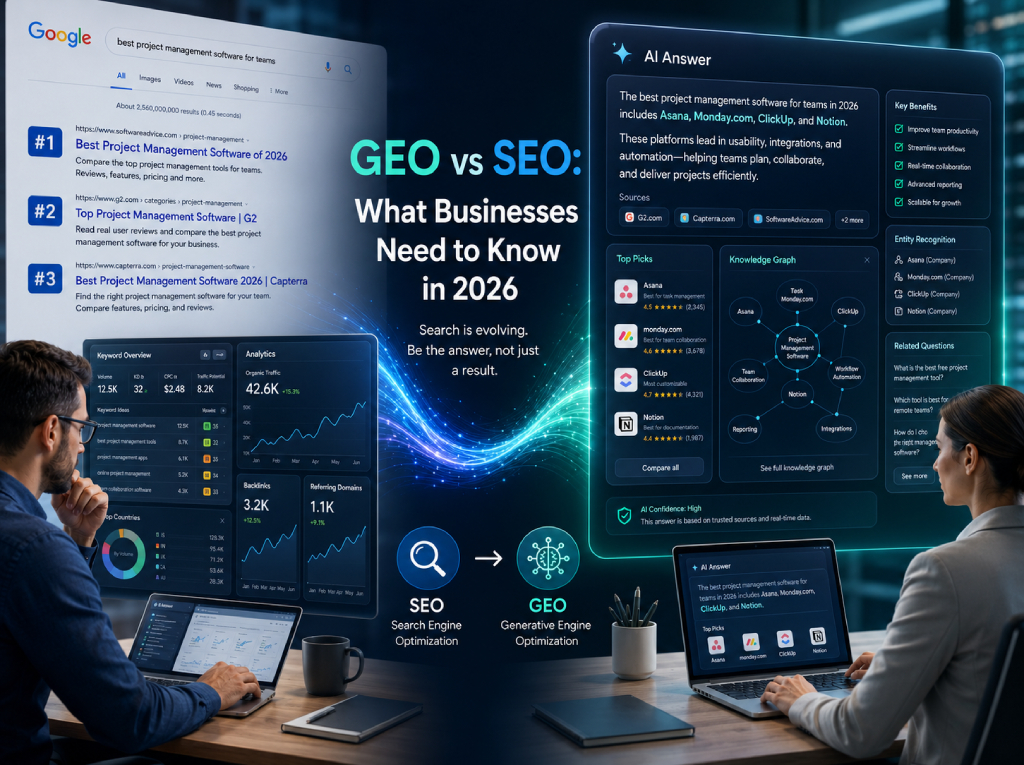
The way people search for information online is changing rapidly. Traditional search engines still play a critical role in helping users discover websites, products, and services, but the rise of AI-powered search experiences is transforming how content is found and consumed.
For years, Search Engine Optimization (SEO) has been the foundation of online visibility. Businesses invested in creating optimized content, building authority, and improving technical website performance to earn higher rankings in search results. While these practices remain important, a new approach is gaining attention: Generative Engine Optimization (GEO).
As AI-powered tools become a primary source of information for users, businesses must understand how GEO differs from SEO and how both strategies can work together. In 2026, organizations that adapt to these changes will be better positioned to maintain visibility, attract qualified traffic, and generate leads.
What Is SEO?
SEO is the process of optimizing a website and its content to improve visibility in search engine results pages (SERPs). The goal is to increase organic traffic by ranking higher for relevant search queries.
Traditional SEO focuses on several key areas:
- Keyword research and targeting
- On-page optimization
- Technical website performance
- Content quality and relevance
- Internal linking
- Backlink acquisition
- User experience optimization
When a user searches for information on a search engine, SEO helps ensure that your website appears among the most relevant results.
For example, if a business offers web design services, SEO efforts may focus on ranking for keywords such as “custom website design services” or “responsive web development.”
The objective is straightforward: attract users to your website through organic search visibility.
What Is GEO?
Generative Engine Optimization (GEO) refers to optimizing content so that AI-powered search systems and generative platforms can understand, reference, and recommend your content when responding to user queries.
Unlike traditional search engines that display a list of links, AI-powered platforms generate direct answers using information gathered from multiple sources.
Examples of AI-driven search experiences include:
- AI-generated search summaries
- Conversational search assistants
- Large language model-based search tools
- Voice search assistants
- AI answer engines
Instead of asking users to click through multiple websites, these platforms provide synthesized answers immediately.
This creates a new challenge for businesses. If your content is not structured, authoritative, and trustworthy enough for AI systems to reference, you may lose visibility even if your website ranks well in traditional search results.
GEO vs SEO: Understanding the Difference
Although GEO and SEO share some similarities, their primary goals differ.
SEO Focuses on Rankings – SEO aims to improve a website’s position within search engine results pages. Success is often measured through:
- Keyword rankings
- Organic traffic
- Click-through rates
- Conversions from search traffic
The goal is to encourage users to visit your website.
GEO Focuses on Citations and AI Visibility – GEO aims to increase the likelihood that AI-powered systems will reference your content when generating answers. Success may be measured through:
- Brand mentions in AI-generated responses
- Content citations
- AI search visibility
- Authority signals
- Share of voice across AI platforms
The goal is to ensure your expertise becomes part of the answer itself.
Why GEO Matters in 2026
Consumer behavior is evolving. More users are turning to AI-powered search tools for quick answers instead of browsing multiple websites. This shift is changing how businesses approach content creation and digital marketing.
Several factors are driving GEO adoption:
- Growing Use of AI Search – AI-driven search platforms continue to improve their ability to summarize information and provide recommendations. As adoption increases, businesses need content that can be easily understood and referenced by AI systems.
- Rise of Zero-Click Experiences – Many users now receive answers directly within search interfaces without visiting external websites. This means businesses must focus on being included in those answers rather than relying solely on clicks.
- Increased Competition for Visibility – As more organizations invest in content marketing, standing out becomes increasingly difficult. GEO helps businesses gain visibility beyond traditional rankings.
How SEO and GEO Work Together
One common misconception is that GEO will replace SEO. In reality, GEO and SEO complement each other. Many of the factors that contribute to strong SEO performance also improve GEO effectiveness.
High-Quality Content – Both strategies reward content that is:
- Accurate
- Informative
- Well-structured
- Relevant to user intent
Expertise and Authority – AI systems often prioritize content from authoritative sources. Building expertise through thought leadership, industry insights, and detailed guides benefits both SEO and GEO.
Technical Website Health – Fast-loading pages, mobile-friendly designs, and proper site architecture improve user experience while making content easier to access and process.
Content Organization – Clear headings, structured formatting, FAQs, and logical content flow help search engines and AI systems understand information more effectively.
Best Practices for GEO in 2026
Businesses looking to strengthen AI search visibility should consider the following strategies.
Create Comprehensive Content – AI systems often prefer content that provides complete answers. Rather than creating short articles focused solely on keywords, develop in-depth resources that address user questions thoroughly.
Focus on Topical Authority – Publishing multiple pieces of content around related subjects helps establish expertise. Topic clusters and content hubs can demonstrate subject matter authority to both search engines and AI systems.
Use Clear and Structured Formatting – Well-organized content improves readability and machine understanding. Include:
- Descriptive headings
- Bullet points
- Tables where appropriate
- Frequently asked questions
- Summary sections
Prioritize Trustworthiness – AI platforms are increasingly selective about the information they reference. Support claims with credible data, demonstrate expertise, and keep content updated.
Optimize for User Intent – Understanding what users want to know remains essential. Content should answer questions clearly and provide practical value rather than focusing exclusively on keyword placement.
Common Mistakes Businesses Should Avoid
As organizations adopt GEO strategies, several mistakes can limit effectiveness.
- Ignoring Traditional SEO – SEO remains critical for organic visibility and traffic generation. Businesses should avoid abandoning proven optimization practices.
- Publishing Low-Value AI-Generated Content – Large volumes of generic content rarely build authority. Focus on original insights, expertise, and valuable information.
- Neglecting Content Updates – Outdated information can reduce credibility and visibility. Regularly review and refresh content to maintain accuracy.
- Focusing Only on Traffic Metrics – Future success will involve measuring more than website visits. Businesses should also monitor brand visibility, mentions, engagement, and AI-generated citations.
The Future of Search Marketing
The search ecosystem is becoming more complex. Traditional search engines continue to drive valuable traffic, while AI-powered platforms are creating new opportunities for brand discovery and customer engagement. Businesses that embrace both SEO and GEO will be better equipped to adapt to changing search behaviors.
Rather than viewing GEO and SEO as competing strategies, organizations should treat them as complementary components of a modern digital marketing approach. SEO helps users find your website, while GEO helps ensure your expertise is included in the answers users receive from AI-powered systems.
Conclusion
As AI-powered search continues to evolve, businesses must rethink how they approach online visibility. SEO remains essential for driving organic traffic and improving search rankings, but GEO is becoming increasingly important for maintaining visibility within AI-generated search experiences.
Organizations that invest in high-quality content, establish topical authority, and optimize for both search engines and AI platforms will be better positioned for long-term success in 2026 and beyond.
Looking to strengthen your SEO and GEO strategy? Segnant helps businesses improve search visibility, create authoritative content, and develop data-driven digital marketing campaigns that drive measurable growth. Contact our team today to build a future-ready search strategy.